

Introduction: The Unseen Battleground of Competition
In the hyper-competitive world of professional esports, success is often measured in milliseconds, where the smallest delay between a player’s action and its visual outcome can spell the difference between a triumphant clutch play and a devastating loss. While raw mechanical skill, strategic depth, and countless hours of practice form the bedrock of elite performance, the hardware used by a professional player acts as the critical conduit between their intention and the game environment. Among all peripherals, the gaming monitor stands as perhaps the most vital component, serving as the only physical link through which the player perceives the unfolding competitive reality. Standard consumer monitors, with their inherent input lag and slow refresh rates, introduce unacceptable delays that effectively handicap the best players, erasing the razor-thin competitive advantage they fight so hard to attain.
The choice of a professional gaming monitor is, therefore, a highly technical and strategic decision. It goes far beyond simply picking a model with a high-resolution display. Elite competitors obsess over metrics that are meaningless to casual users: minimizing input lag to near-zero levels, maximizing refresh rates to ensure liquid-smooth motion clarity, and achieving lightning-fast response times to eliminate visual artifacts that obscure target acquisition. The convergence of these technological features—often referred to collectively as achieving “zero latency”—is what allows a player’s reflexes to be translated into instantaneous on-screen action, ensuring the hardware never impedes the human element.
This comprehensive guide will deconstruct the sophisticated technology behind professional gaming monitors. We will delve into the critical metrics that define elite performance, analyze the differences between major panel technologies, explore the crucial role of adaptive synchronization, and detail the often-overlooked features that collectively determine the final, milliseconds-long gap between a player’s thought and the visual confirmation of their action. Understanding these monitor secrets is essential to grasping how top professionals gain and maintain their competitive edge in the fastest-paced digital sports.
Section 1: The Three Pillars of Performance
Professional monitors are defined by three interconnected technical specifications that are absolutely critical for high-speed competitive play.
A. Refresh Rate (Hertz – $\text{Hz}$)
Refresh rate measures how many times per second the monitor updates the image, directly impacting motion clarity and smoothness.
A. Frames Per Second ($\text{FPS}$) Match: The monitor’s refresh rate must be matched or exceeded by the game’s Frames Per Second ($\text{FPS}$) output from the $\text{GPU}$. A high refresh rate is useless if the graphics card cannot render enough frames to feed it.
B. The $144\text{Hz}$ Baseline: For competitive play, the absolute minimum acceptable standard is $144\text{Hz}$. This provides a significantly smoother visual experience compared to the standard $60\text{Hz}$ consumer displays, reducing motion blur.
C. The $240\text{Hz}$ Standard: The modern professional standard for high-tier esports is $240\text{Hz}$, offering superior clarity and responsiveness, making small, rapid movements in fast-paced games easier to track.
D. The $360\text{Hz}$ and Above: The current pinnacle includes $360\text{Hz}$ and even $540\text{Hz}$ monitors, favored by the absolute elite in titles like Counter-Strike or Valorant, where every fractional advantage in motion clarity is exploited.
B. Response Time (Gray-to-Gray – $\text{GTG}$)
Response time is the speed at which a pixel can change color, typically measured from gray-to-gray ($\text{GTG}$), and directly impacts motion artifacting.
A. Eliminating Ghosting: Slow response times cause ghosting or smearing—visual artifacts left behind rapidly moving objects. A faster response time ensures the previous frame is completely erased before the next one is drawn.
B. The 1ms Standard: For professional gaming, a $1\text{ms}$ Gray-to-Gray ($\text{GTG}$) response time has long been the industry standard minimum, ensuring clear motion without perceptible ghosting.
C. Sub-1ms Performance: Newer panel technologies, particularly advanced $\text{IPS}$ (In-Plane Switching) and $\text{OLED}$ (Organic Light-Emitting Diode), achieve sub-$1\text{ms}$ performance, reaching speeds as low as $0.03\text{ms}$ in some cases.
D. Overdrive Technology: Many monitors utilize Overdrive technology to artificially accelerate pixel response time. While this can achieve a faster $\text{GTG}$ number, excessive overdrive can introduce reverse ghosting or “overshoot,” which is distracting.
C. Input Lag (Total System Latency)
Input lag is the total delay between a player’s input (mouse click) and the monitor displaying the resulting image, the single most critical factor for perceived responsiveness.
A. Measuring the Delay: Input lag measures the full pipeline delay, including the monitor’s processing delay (internal scaler and electronics) and the display delay. This must be minimized across the entire system.
B. The Processing Delay: The most controllable factor within the monitor is the processing delay—the time it takes for the monitor’s scaler to interpret the signal from the $\text{GPU}$. Professional monitors use minimal, optimized scalers to keep this near zero.
C. Low Input Modes: High-end monitors feature specific Low Input Lag modes or Game Modes that bypass most internal image processing features (like color enhancements), sacrificing picture quality for pure speed.
D. NVIDIA Reflex/AMD Anti-Lag: Technologies like NVIDIA Reflex or AMD Anti-Lag are system-wide solutions that work with the monitor to reduce overall system latency, coordinating the $\text{CPU}$ and $\text{GPU}$ to further minimize input lag.
Section 2: Panel Technology: $\text{TN}$ vs. $\text{IPS}$ vs. $\text{OLED}$
The underlying panel technology dictates the monitor’s strengths and weaknesses regarding speed, color quality, and viewing angles.
A. Twisted Nematic ($\text{TN}$): The Speed King
Historically, $\text{TN}$ panels dominated competitive esports due to their unmatched speed and low manufacturing cost.
A. Fastest Response Time: $\text{TN}$ panels traditionally offer the fastest true response times (often $1\text{ms}$or lower), making them the first choice for professionals where speed is the only metric that matters.
B. Poor Viewing Angles: The primary weakness of $\text{TN}$ is poor viewing angles. Color and contrast shift noticeably when viewed from the side, making them unsuitable for content creation or shared viewing.
C. Limited Color Reproduction: $\text{TN}$ panels have limited color reproduction and low contrast ratios compared to other technologies, resulting in less vibrant and less accurate image quality.
D. Declining Popularity: Due to the massive speed improvements in $\text{IPS}$ and $\text{OLED}$ technology, the use of $\text{TN}$ panels in the premium professional segment is declining in popularity, often relegated to budget competitive options.
B. In-Plane Switching ($\text{IPS}$): The New Professional Standard
Modern $\text{IPS}$ technology has successfully blended the speed required for competition with the color quality desired for general use.
A. Excellent Color Accuracy: $\text{IPS}$ panels provide excellent color accuracy and wide viewing angles, making them ideal for professionals who also stream, create content, or simply want a better visual experience outside of competitive matches.
B. High Speed $\text{IPS}$: Recent advancements have created High Speed $\text{IPS}$ panels capable of matching $\text{TN}$ response times (often $1\text{ms}$ or less), making them the current go-to choice for $240\text{Hz}$ and $360\text{Hz}$ monitors.
C. Glow and Contrast: $\text{IPS}$ panels can suffer from a phenomenon known as “$\text{IPS}$ glow” and generally have lower static contrast ratios compared to Vertical Alignment ($\text{VA}$) or $\text{OLED}$.
D. The Versatile Choice: $\text{IPS}$ panels are considered the versatile choice, offering a near-perfect balance between competitive speed and premium image quality for all-around professional use.
C. Organic Light-Emitting Diode ($\text{OLED}$): The Future
$\text{OLED}$ technology promises revolutionary speed and perfect visual quality, setting a new benchmark for competitive display performance.
A. Instantaneous Response: $\text{OLED}$ pixels generate their own light, allowing them to turn on and off instantaneously. This results in the fastest possible response times, often rated in the microseconds ($0.03\text{ms}$$\text{GTG}$).
B. Perfect Blacks and Contrast: Because pixels can be truly turned off, $\text{OLED}$ delivers perfect blacks and infinite contrast ratios, providing unparalleled image depth and clarity.
C. Burn-In Risk: The major technical drawback remains the risk of burn-in—permanent image retention from static elements (like $\text{HUDs}$ or desktop icons) being displayed for long periods.
D. The Visual Apex: $\text{OLED}$ monitors represent the visual apex of display technology, offering a game-changing combination of speed and clarity that professionals are rapidly adopting despite the cost and burn-in risk.
Section 3: Adaptive Synchronization and Motion Clarity
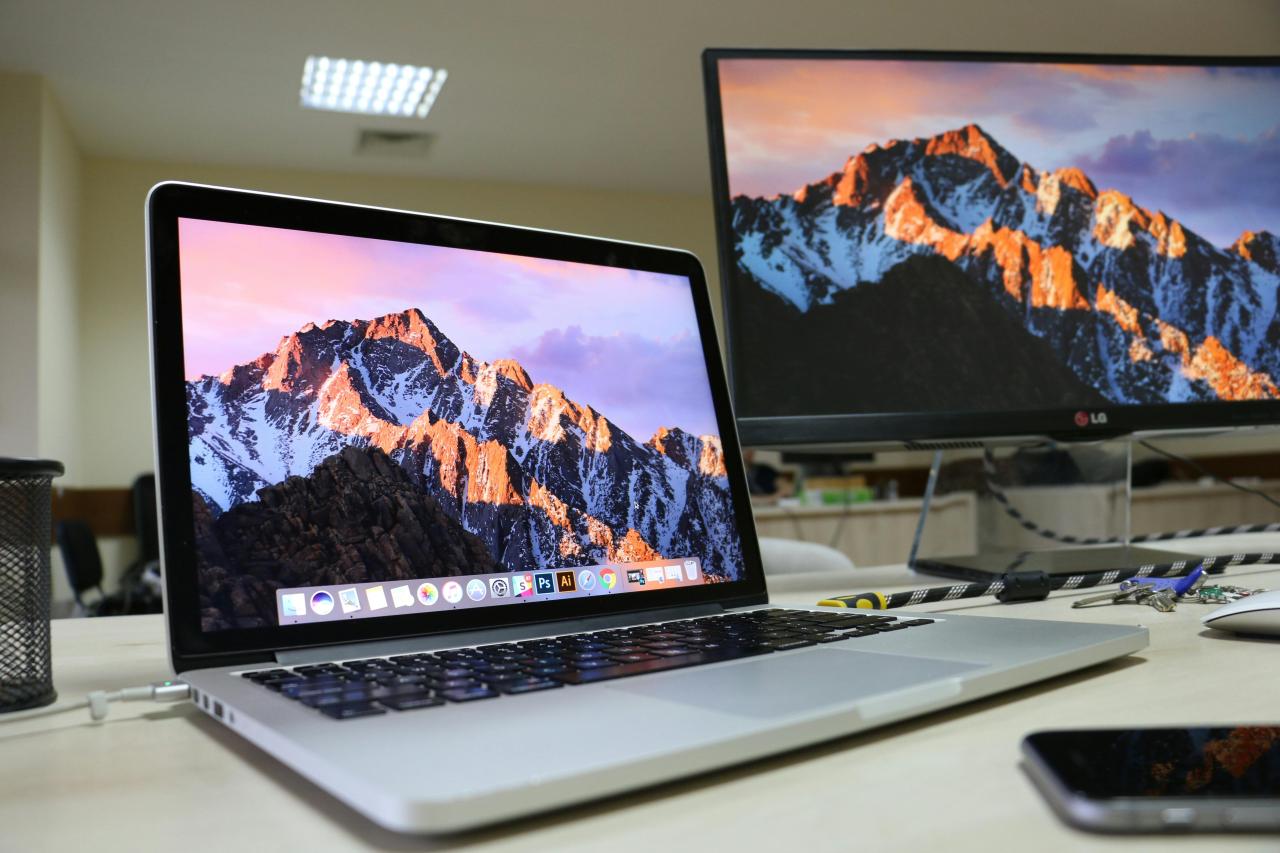
Achieving high-speed performance is not enough; the monitor must also maintain perfect synchronization with the graphics card to eliminate disruptive visual errors.
A. The Problem: Screen Tearing and Stuttering
When the $\text{GPU}$ and monitor are out of sync, two major visual anomalies destroy competitive performance.
A. Screen Tearing: Screen tearing occurs when the monitor displays parts of two different frames simultaneously. This creates a horizontal break line across the screen, which is extremely distracting in high-speed play.
B. Stuttering and Input Lag (V-Sync): The traditional fix, V-Sync, eliminates tearing but often introduces noticeable stuttering and input lag when the $\text{FPS}$ drops below the refresh rate, a massive competitive disadvantage.
C. Desynchronization Effect: Both tearing and stuttering are symptoms of desynchronization. The monitor is simply drawing data at a fixed rate, regardless of when the $\text{GPU}$ finishes rendering the full frame.
D. Competitive Disruption: Both visual defects lead to competitive disruption. Tearing obscures target details, and stuttering introduces unpredictable latency, making precise aiming impossible.
B. Adaptive Sync Technologies ($\text{G-SYNC}$ and FreeSync)
Adaptive Synchronization technologies dynamically match the monitor’s refresh rate to the $\text{GPU}$‘s $\text{FPS}$, solving the synchronization problem without adding delay.
A. NVIDIA $\text{G-SYNC}$: NVIDIA $\text{G-SYNC}$ requires a proprietary hardware module inside the monitor, which guarantees extremely high quality and a broad variable refresh rate ($\text{VRR}$) range, but adds to the monitor’s cost.
B. $\text{AMD}$ FreeSync: $\text{AMD}$ FreeSync uses an open-standard protocol, meaning it requires no proprietary hardware module. This makes it more affordable and widely available, though quality control can sometimes be more variable across different models.
C. VRR Range: A crucial factor is the Variable Refresh Rate ($\text{VRR}$) range. A wider range ensures that synchronization is maintained even when the $\text{FPS}$ drops significantly below the monitor’s maximum refresh rate.
D. Low Framerate Compensation ($\text{LFC}$): Technologies like Low Framerate Compensation ($\text{LFC}$)automatically insert multiple copies of a frame when the $\text{FPS}$ falls too low, ensuring the monitor remains in the $\text{VRR}$ range and eliminating stuttering at low framerates.
Section 4: Critical Overlooked Features
Beyond the three pillars, several secondary features are critical to maintaining the professional edge and preventing player fatigue.
A. Ergonomics and Physical Design
The physical usability of the monitor is crucial for maintaining performance over long training sessions.
A. Adjustability: Full ergonomic adjustability (height, tilt, swivel, pivot) is essential. Professionals spend countless hours at their desks and require precise monitor positioning to minimize neck strain and maintain optimal posture.
B. Bezel Thickness: Minimal bezel thickness is important for players who utilize multi-monitor setups, reducing the visual gap between screens and maintaining immersion.
C. Matte vs. Glossy: The choice between a matte (anti-glare) and glossy finish affects visibility. Professionals almost universally prefer matte screens to eliminate distracting reflections from stage lighting or room environment.
D. VESA Mounting: Support for VESA mounting allows the monitor to be attached to aftermarket arms or stands, giving players maximum flexibility in desk setup and space management.
B. Anti-Fatigue and Eye Health Features
Minimizing eye strain is key to sustained performance during long competitive events.
A. Flicker-Free Technology: Flicker-Free technology eliminates the rapid, invisible pulses of light used by older monitors to control brightness, which greatly reduces eye fatigue over long periods.
B. Low Blue Light Modes: Integrated Low Blue Light modes reduce the amount of high-energy blue light emitted by the screen, helping to preserve the user’s circadian rhythm and minimize late-night eye strain.
C. Ambient Lighting Sensors: Some advanced monitors include ambient lighting sensors that automatically adjust the screen brightness and color temperature to match the room lighting, optimizing viewing comfort.
D. Black Equalizer: Features like Black Equalizer (or Black Stabilization) lighten dark areas of the screen without overexposing bright areas. This is a competitive tool used in dark game segments to spot hidden enemies, though some leagues restrict its use.
Section 5: The Strategic Choice: $24$ Inches and $1080\text{p}$
Despite technological advances, professional players overwhelmingly stick to a specific screen size and resolution for competitive advantage.
A. The $24$-Inch Standard
The $24$-inch screen size remains the industry standard for competitive monitors due to ergonomic and cognitive reasons.
A. Field of View (FOV) Advantage: The $24$-inch size provides the optimal Field of View ($\text{FOV}$) radius. The player can comfortably track all critical information (minimap, $\text{HUD}$, center screen) without excessive eye or head movement.
B. Pixel Density: At $24$ inches with $1080\text{p}$ resolution, the pixel density is manageable, making the on-screen elements large and clear enough for quick recognition without being too overwhelming.
C. Tournament Standardization: Tournament standardization favors $24$-inch monitors. By practicing on the same size they will compete on, pros minimize the disruptive visual adjustment required at live events.
D. Focus Maximization: The size is perfectly tailored for focus maximization. Larger screens require greater cognitive effort to scan, introducing unnecessary latency into decision-making.
B. The Persistence of $1080\text{p}$ Resolution
Even with $4\text{K}$ and $1440\text{p}$ readily available, $1080\text{p}$ remains dominant in high-level competition for pure speed.
A. Maximized $\text{FPS}$ Output: Lower resolution allows the $\text{GPU}$ to render frames much faster, ensuring maximized $\text{FPS}$ output. This is crucial for hitting the $240\text{Hz}$ or $360\text{Hz}$ ceiling and minimizing input lag.
B. Reduced Signal Load: Sending a $1080\text{p}$ signal over $\text{DisplayPort}$ or $\text{HDMI}$ requires reduced signal load and processing time compared to higher resolutions, shaving off critical milliseconds of latency.
C. Competitive Visual Clarity: While $1080\text{p}$ may look less sharp than $4\text{K}$, the primary competitive focus is on competitive visual clarity—the clear separation of pixels during rapid movement—which is achieved through high refresh rate, not high pixel count.
D. System Resource Allocation: Choosing $1080\text{p}$ ensures that system resources are allocated almost entirely to rendering speed rather than pixel count, prioritizing the frame rate advantage over graphical fidelity.
Conclusion: Latency is the Enemy

The pursuit of the perfect professional gaming monitor is fundamentally a quest to eliminate latency, ensuring the competitive player’s skill is never bottlenecked by hardware. The three most vital metrics defining elite performance are the high refresh rate ($\text{Hz}$) for motion smoothness, the incredibly low response time ($\text{GTG}$) for artifact elimination, and the minimization of input lag for instant feedback.
The shift to High Speed $\text{IPS}$ panels has become the new professional standard, successfully balancing competitive speed with better visual quality for content creators.
$\text{OLED}$ technology represents the future of professional displays, promising instantaneous response times and perfect contrast, despite current concerns about burn-in.
Adaptive Sync technologies ($\text{G-SYNC}$ and FreeSync) are essential for maintaining synchronization between the $\text{GPU}$ and monitor, thus preventing distracting screen tearing and stuttering.
The use of Low Input Lag modes and system-wide solutions like $\text{NVIDIA}$ Reflex further minimize the delay between the player’s action and the on-screen result.
For competitive and cognitive reasons, the industry standard remains the $24$-inch screen size paired with $1080\text{p}$ resolution to ensure maximum $\text{FPS}$ and optimal Field of View ($\text{FOV}$).
Beyond speed, features like Flicker-Free technology and full ergonomic adjustability are crucial for sustaining performance and minimizing long-term player fatigue.
Ultimately, the best monitor acts as a near-invisible window, delivering the purest, most immediate translation of the game possible.