


Introduction: The Evolution of Digital Value
The video game industry has always been a pioneer in creating and monetizing digital assets, from simple cosmetic skins to complex virtual currencies. For decades, players have poured countless hours and significant money into acquiring these items, yet the fundamental truth remained that they never truly owned them; the assets resided on the game company’s centralized server, and could be revoked or deleted at any time. The emergence of Non-Fungible Tokens ($\text{NFTs}$) and blockchain technology is poised to fundamentally disrupt this established paradigm of digital ownership, introducing an unprecedented level of scarcity, transparency, and transferability to in-game assets. This technological shift is not merely about selling expensive jpegs; it is about embedding verifiable proof of ownership into the core architecture of gaming, opening up completely new economic opportunities for both players and developers.
$\text{NFTs}$ transform a standard digital item into a unique, verifiable token that is recorded on a decentralized ledger, the blockchain. This innovation grants players true property rights over their virtual items, allowing them to trade, sell, or even utilize these assets across multiple game titles or external marketplaces without needing the game developer’s permission. This model empowers the player by turning their in-game time and investment into potentially valuable, liquid assets, creating the foundation for a vibrant, player-driven economy often dubbed “Web3 Gaming” or “Play-to-Earn ($\text{P2E}$).”
This comprehensive article will explore the transformative intersection of $\text{NFTs}$ and gaming, detailing how these digital assets revolutionize fan engagement, change the economic relationship between players and publishers, and examine the strategic complexities and technological hurdles facing this nascent, yet revolutionary, sector. We will analyze the different types of $\text{NFTs}$ currently being integrated, discuss the controversial economic models they enable, and project how this technology is likely to reshape the future of digital asset creation and competitive gaming itself.
Section 1: Decoding the Core Concepts of NFTs
To understand their impact on gaming, one must first grasp the underlying technology and unique properties of Non-Fungible Tokens.
A. What Defines an NFT?
An $\text{NFT}$ is essentially a unit of data stored on a decentralized digital ledger, or blockchain, that certifies a digital asset to be unique and therefore not interchangeable.
A. Non-Fungibility Defined: Unlike fungible assets (like a standard dollar or Bitcoin, where one unit is identical to another), an $\text{NFT}$ is non-fungible. Each token possesses a unique identifier and metadata, making it irreplaceable.
B. Proof of Ownership: The primary function of the $\text{NFT}$ is to provide an undeniable proof of ownership of a specific digital item. This ownership record is transparent and immutable, verifiable by anyone on the public blockchain.
C. Decentralized Ledger: $\text{NFTs}$ are hosted on a decentralized ledger (most commonly Ethereum or Polygon). This means no single company or entity can unilaterally erase or seize the asset from the owner.
D. Smart Contract Foundation: Each $\text{NFT}$ is governed by a smart contract—a self-executing agreement stored on the blockchain. This contract often includes rules for royalties, transferability, and usage rights.
B. The Spectrum of In-Game NFT Assets
$\text{NFTs}$ can represent virtually any digital asset within a game environment, from simple cosmetics to core functional items.
A. Cosmetic Items: The most common form of in-game $\text{NFT}$ is cosmetic items (skins, emotes, sprays). Their value is derived solely from their scarcity, aesthetics, and social status within the community.
B. Functional Assets: More complex games use $\text{NFTs}$ for functional assets (weapons, armor, land parcels, specialized characters). These items grant the owner specific, verifiable in-game utility or advantage.
C. Virtual Land and Real Estate: In the context of the Metaverse and certain strategy games, $\text{NFTs}$ represent virtual land and real estate. Ownership of this land may grant staking rewards, advertising revenue, or control over a digital space.
D. Character and Identity Tokens: Some games tokenize the entire player’s character or identity as an $\text{NFT}$. This token tracks all accumulated experience, skills, and equipment, creating a verifiable digital biography.
Section 2: Transforming Player-Developer Economics
The shift to $\text{NFT}$-enabled gaming fundamentally alters the traditional centralized economic model, creating a two-way street of value.
A. The Play-to-Earn (P2E) Model
$\text{P2E}$ is the revolutionary concept where players are rewarded with valuable tokens or $\text{NFTs}$ for their time and effort spent in the game.
A. Rewarding Time Investment: The $\text{P2E}$ model directly rewards time investment. Players who grind or achieve specific milestones are compensated with tokens that can be sold on secondary crypto exchanges for real-world currency.
B. Player Liquidity: $\text{NFTs}$ grant players liquidity—the ability to easily cash out their in-game assets without needing the game publisher’s approval. This creates a powerful financial incentive for long-term engagement.
C. The Asset Utility Loop: Players are incentivized to acquire valuable $\text{NFTs}$ either to improve their in-game performance (utility loop) or to sell them later for profit, turning leisure into a form of labor.
D. The Creation of Micro-Economies: $\text{P2E}$ games often spur the creation of entire micro-economies, including player-run guilds, internal job markets (e.g., breeding services), and asset rental systems.
B. Developer and Publisher Incentives
Developers benefit from the $\text{NFT}$ model through new revenue streams and increased player retention.
A. Secondary Market Royalties: The smart contract governing an $\text{NFT}$ can be programmed to enforce secondary market royalties. Developers automatically receive a small percentage of every peer-to-peer resale of their asset in perpetuity.
B. Increased Player Retention: The financial incentive provided by $\text{NFTs}$ leads to dramatically increased player retention. Players are less likely to quit a game when their accumulated assets hold verifiable, transferrable value.
C. Initial Sales and Funding: $\text{NFTs}$ allow developers to generate massive initial funding through the sale of initial asset packs or character collections, often bypassing traditional venture capital funding models.
D. Community-Driven Content: The $\text{NFT}$ model encourages community-driven content creation, as players are incentivized to promote the game and its assets, organically increasing the game’s visibility and user base.
Section 3: Revolutionizing Fan Engagement and Loyalty
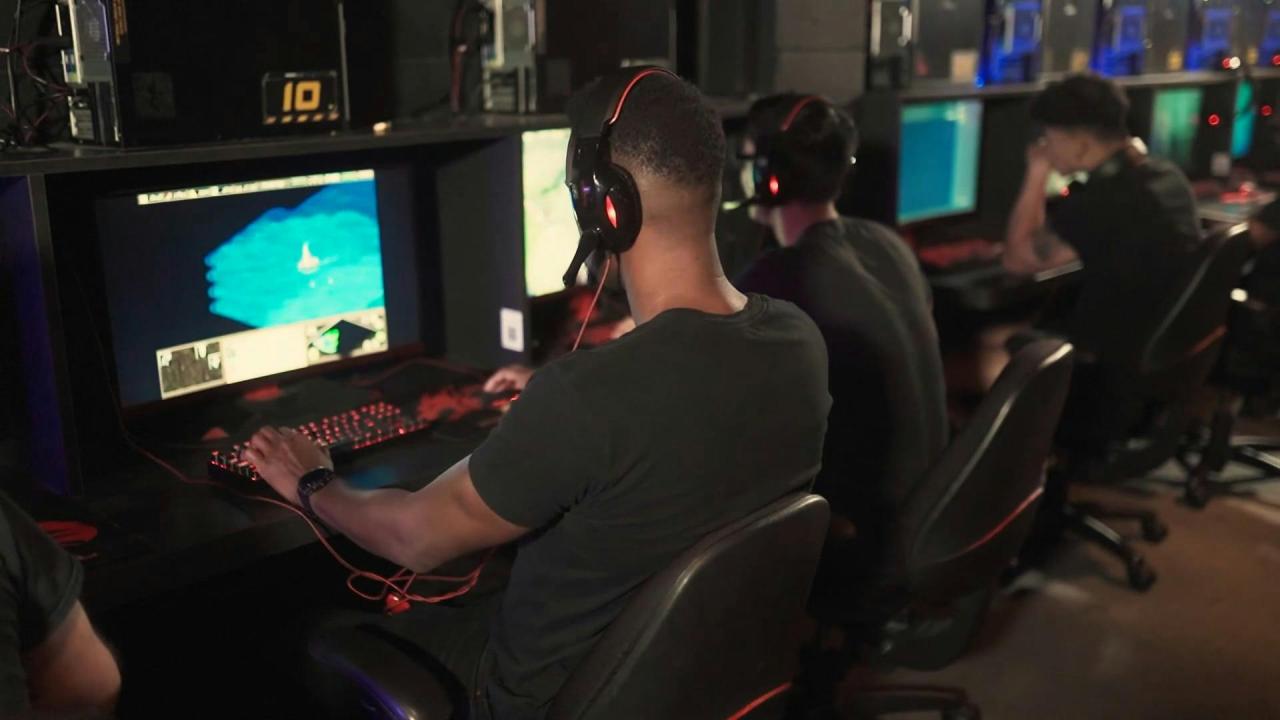
Beyond economics, $\text{NFTs}$ offer unique mechanisms to deepen the connection between fans, teams, and game franchises.
A. $\text{NFTs}$ as VIP Access and Status
$\text{NFTs}$ can function as verifiable digital passes, granting holders exclusive access and elevated social status.
A. Exclusive Access Passes: Holding a specific $\text{NFT}$ can grant exclusive access passes to alpha or beta game content, private servers, or special community events, enhancing the feeling of being a true insider.
B. Digital Collectibles and Trophies: Game franchises can issue digital collectibles and trophies tied to competitive events (e.g., World Championship winning skins), commemorating historical moments with verifiable scarcity.
C. Governance and Voting Rights: Certain $\text{NFTs}$ can bestow governance and voting rights to their holders, allowing the community to influence future development decisions or economic policy within the game ecosystem.
D. Proof of Fandom: $\text{NFTs}$ function as verifiable proof of fandom. Owning a rare, early-edition collectible proves a player’s long-term loyalty and early involvement in the community.
B. Cross-Game and Metaverse Utility
The true disruptive potential of $\text{NFTs}$ lies in their ability to function across different digital environments.
A. Interoperability Potential: $\text{NFTs}$ unlock interoperability potential. A weapon acquired in Game $\text{A}$ might be usable as a cosmetic skin in Game $\text{B}$ or as a prop in a social Metaverse environment.
B. Unified Digital Identity: The technology facilitates a unified digital identity. A single set of $\text{NFT}$ assets can travel with the user across various virtual worlds, linking their accumulated wealth and status.
C. Open Marketplaces: The establishment of open marketplaces allows for trading between different game communities. This dramatically increases the market size and liquidity for every individual asset.
D. Decentralized $\text{IP}$ Sharing: In the future, $\text{NFTs}$ could enable decentralized $\text{IP}$ sharing, where third-party developers could use a game’s established $\text{NFT}$ assets in their own creations, provided they adhere to the original smart contract rules.
Section 4: Challenges, Risks, and Controversies
Despite the revolutionary potential, the integration of $\text{NFTs}$ into gaming is fraught with significant technological, economic, and ethical challenges.
A. Economic Instability and Volatility
The $\text{P2E}$ model is highly vulnerable to financial instability, posing risks to both players and publishers.
A. Token Inflation: $\text{P2E}$ economies often suffer from high token inflation. If the game generates its currency faster than new players are entering and investing, the token’s value collapses, destroying the financial incentive.
B. Ponzi Scheme Accusations: Critics often level Ponzi scheme accusations against $\text{P2E}$ models, arguing that the rewards for early adopters are only paid out by the investments of new players, making the system unsustainable.
C. Regulatory Uncertainty: The entire crypto and $\text{NFT}$ space operates under massive regulatory uncertainty. Future government regulations could severely limit the ability to cash out tokens or define $\text{NFTs}$ as securities.
D. Market Hype and Scams: The sector is plagued by market hype and scams. Many $\text{NFT}$ projects prioritize quick profits from initial sales over sustainable game development, leading to failed projects.
B. Environmental and Ethical Concerns
The underlying technology and the nature of asset sales raise serious questions about sustainability and fair practice.
A. Environmental Impact: While newer blockchains are more efficient, many $\text{NFTs}$ still rely on Proof-of-Work systems, raising serious environmental concerns due to the massive energy consumption required for transaction verification.
B. Gambling and Exploitation: The speculative nature of $\text{NFT}$ assets can blur the line between gaming and gambling, raising ethical concerns about the exploitation of younger or financially vulnerable players.
C. Resistance from Traditional Gamers: A large segment of traditional gamers resist $\text{NFTs}$, viewing the integration of speculative finance into games as a cynical, profit-driven move that prioritizes investors over player experience.
D. Centralization Risk: Despite the promise of decentralization, many $\text{NFT}$ games retain a centralization risk. Developers often keep control over core game logic, allowing them to unilaterally change asset utility or freeze accounts.
Section 5: The Future Trajectory of Web3 Gaming
The integration of $\text{NFTs}$ into gaming is not a fleeting trend but the beginning of a long-term transformation that will redefine the digital entertainment landscape.
A. Maturation and Sustainability
The sector is expected to undergo a necessary process of consolidation, moving away from quick speculative projects toward sustainable, high-quality games.
A. Focus on Gameplay: The future of Web3 gaming will pivot to a focus on core gameplay. The $\text{NFT}$economy will serve the game, rather than the game merely existing to serve the token’s price.
B. Interoperable Standards: The industry needs to establish robust, interoperable technical standards (e.g., shared wallets, asset metadata formats) to truly realize the potential for cross-game utility.
C. Institutional Investment: As regulatory clarity improves, a surge of institutional investment from traditional gaming studios and large financial firms is expected, driving higher production quality.
D. Improved Blockchain Efficiency: Ongoing technological advancements in blockchain technology (like Layer $2$solutions) will dramatically improve blockchain efficiency, reducing fees and environmental impact.
B. Redefining the Player Relationship
The evolution of $\text{NFT}$ integration promises a more democratic and participatory future for game development.
A. Player-Owned Economies: The concept of player-owned economies will become the norm in certain genres, where the community holds significant influence over the asset flow and inflation controls.
B. Decentralized Autonomous Organizations ($\text{DAOs}$): Games will increasingly be governed, at least in part, by Decentralized Autonomous Organizations ($\text{DAOs}$), granting token holders direct voting power on major decisions.
C. User-Generated Content ($\text{UGC}$) Monetization: $\text{NFTs}$ offer a verifiable path for User-Generated Content ($\text{UGC}$) monetization. Players who create popular skins or maps can receive guaranteed royalties in perpetuity.
D. The Mainstream Shift: As major, trusted publishers cautiously integrate $\text{NFT}$ functionalities into their massive existing franchises, the concept of verifiable digital ownership will finally reach mainstream acceptance.
Conclusion: Ownership as the New Feature

The integration of $\text{NFTs}$ into the gaming industry marks a paradigm shift, moving the core relationship between the player and their digital assets from temporary access to verifiable property rights. The most fundamental element is the non-fungibility of the token, ensuring each in-game asset is unique and verifiable on the public blockchain.
This technology directly enables the Play-to-Earn ($\text{P2E}$) model, rewarding player time investment with liquid, marketable cryptocurrency tokens.
Developers benefit immensely through guaranteed secondary market royalties and significantly enhanced player retention rates due to the financial incentive.
$\text{NFTs}$ enhance fan loyalty by acting as exclusive access passes and verifiable digital collectibles tied to significant game events.
The greatest potential lies in interoperability, allowing a single digital asset to be utilized across multiple different game titles or virtual worlds.
However, the sector faces severe risks from token inflation, regulatory uncertainty, and the high environmental impact of legacy blockchain systems.
The future success of Web3 gaming hinges on a necessary pivot toward high-quality core gameplay that is supported by, rather than driven by, the token economy.
Ultimately, the $\text{NFT}$ revolution forces game publishers to adopt a model of shared digital ownership and collaboration with their most dedicated users.